

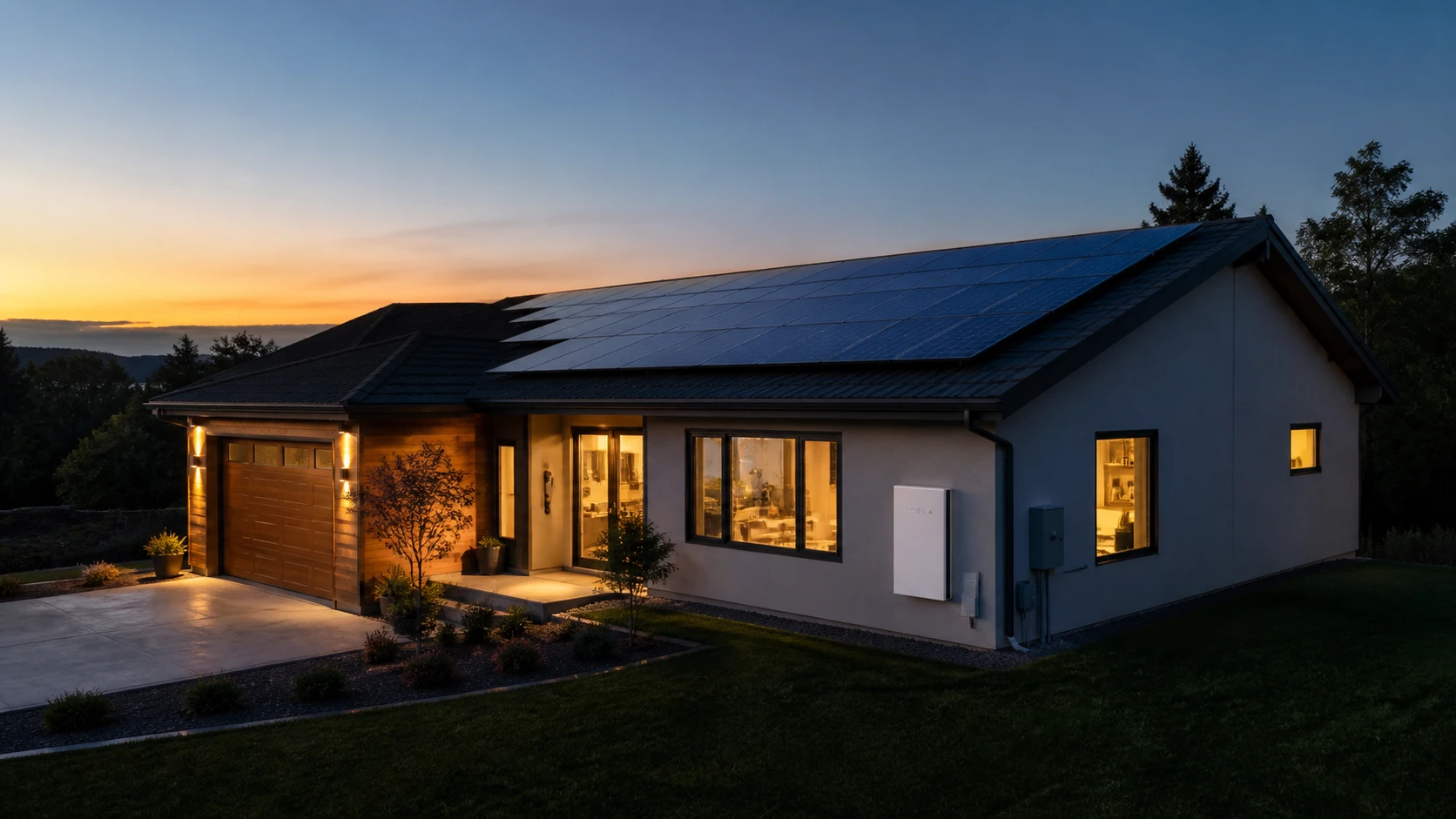
Solar panels and residential batteries serve different purposes, but when they work together, they can create a more complete home energy system.
Solar panels generate energy from sunlight. Tesla Powerwall 3 allows energy to be stored for later use.
Understanding how these two technologies complement each other can help you make more informed decisions about how energy is generated, stored, and used in your home.
Solar panels: generating energy at home
Solar panels generate electricity when sufficient sunlight is available.
During the day, that energy can help meet your home’s electrical needs, including air conditioning, appliances, lighting, electronic devices, and other equipment.
However, solar production changes throughout the day and decreases as available sunlight fades.
At the same time, your home’s energy needs may continue throughout the afternoon and evening.
This raises an important question:
What happens when your solar panels produce energy that your home doesn’t need at that moment?
Tesla Powerwall 3: storing energy for later
This is where residential energy storage comes in.
Tesla Powerwall 3 is a home battery system designed to store energy and make it available for later use, depending on the system’s configuration.
When paired with a compatible solar system, Powerwall 3 can store available solar energy so it can be used at another time.
For example, some of the energy produced during daylight hours may be available later, when solar production decreases or after the sun goes down.
How do solar panels and Powerwall 3 work together?
The idea is simple:
Solar panels generate energy. Powerwall 3 allows it to be stored. Your home uses energy according to its needs and the system’s configuration.
During daylight hours, solar panels can help supply electricity to the home.
When solar energy is available beyond the home’s immediate needs and system conditions allow, some of that energy can be directed to Powerwall 3 for storage.
Later, the stored energy can be used according to the system’s configuration and the home’s energy needs.
In this way, solar generation and energy storage can complement each other within the same system.
What happens in the afternoon and at night?
Your home continues to use electricity even after solar panels stop producing energy.
Air conditioning, refrigerators, lighting, televisions, computers, appliances, and many other devices may continue operating after solar production ends for the day.
Adding a battery makes it possible to store energy and have it available for later use.
This is one of the main differences between having solar generation alone and combining solar panels with an energy storage system.
The appropriate configuration will depend on the home’s energy consumption, solar production, storage capacity, and the specific characteristics of each system.
What about during a power outage?
Tesla Powerwall 3 can also provide backup power during certain grid outages when the system is properly installed and configured for backup.
Energy available in the battery can be used to support the home or selected electrical loads, depending on the design of the installation.
Backup duration will not be the same for every home.
It depends on factors such as the energy available in the battery, the equipment being used, and the home’s overall electricity consumption.
In a properly configured solar and storage system, solar panels may also play a role in the home’s energy strategy during an outage, depending on system conditions and installation characteristics.
Why consider both technologies?
Solar panels and Tesla Powerwall 3 do not perform the same function.
They complement each other.
Solar panels generate energy from sunlight.
Tesla Powerwall 3 adds the ability to store energy and provide backup power when the system is configured for it.
Together, they can form a residential energy system that considers not only how energy is generated, but also when it is needed and how it can be managed.
A system designed around your home’s needs
Every home uses energy differently.
A household with high daytime electricity consumption may have different needs from one that uses more energy in the afternoon or evening.
Other factors can also influence the system design, including air conditioning, electric vehicles, the size of the home, available space for solar panels, electricity rates, and the equipment the homeowner wants to back up.
For this reason, choosing solar panels, energy storage, or a combination of both should begin with an evaluation of each home’s energy needs.
Conclusion
Solar panels and Tesla Powerwall 3 address two important parts of a residential energy system.
Solar panels make it possible to generate energy from sunlight, while Powerwall 3 adds the ability to store energy for later use.
When both technologies are part of a properly designed system, they can work together to provide more options for generating, storing, and managing energy at home.
Because making the most of energy is not only about generating it.
It is also about understanding how to store and use it according to your home’s needs.