

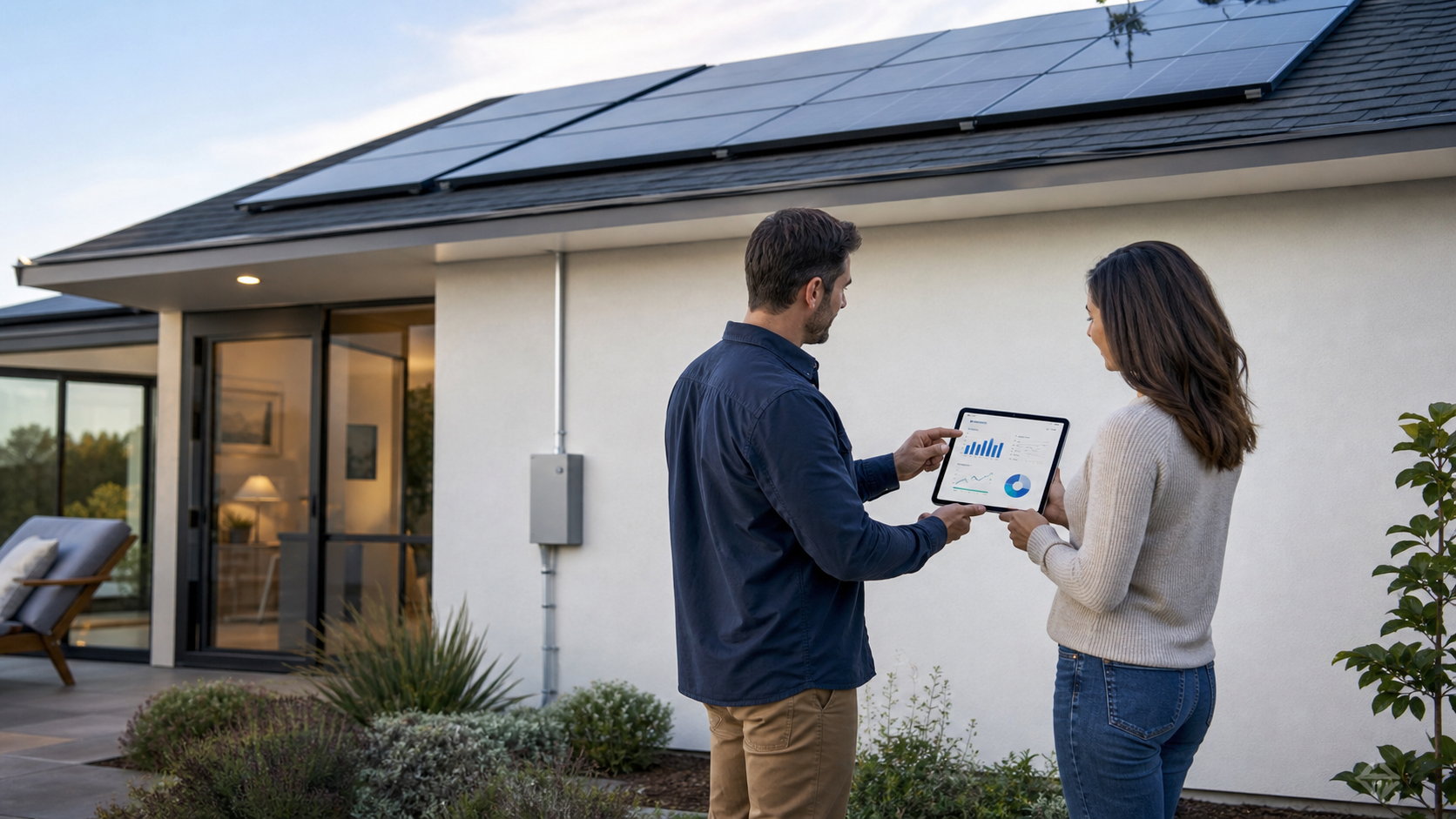
Every home has unique energy needs.
The size of the property, daily energy consumption, electrical appliances, and the homeowner’s goals all play an important role in determining the right energy storage solution.
That’s why there is no one-size-fits-all system.
A well-designed solution begins with evaluating the home’s energy profile and continues by selecting a configuration that meets both current and future needs.
Here’s how the process works, step by step.
1. Analyze the Home’s Energy Consumption
The first step is understanding how much electricity the home uses and when energy demand is highest.
This typically involves reviewing utility bills and analyzing energy usage over the past several months.
This assessment helps identify:
- Average monthly energy consumption.
- Peak usage hours.
- Seasonal changes in electricity demand.
- Appliances that consume the most energy.
Having this information provides a solid foundation for designing the system.
2. Identify Priority Loads
Not every homeowner wants to back up the same appliances during a power outage.
Some prefer to keep only essential devices running, while others want broader whole-home backup.
Common priority loads include:
- Refrigerators.
- Lighting.
- Internet and communication equipment.
- Medical devices.
- Heating and cooling systems.
- Water pumps.
- Essential household appliances.
Defining these priorities makes it easier to determine the system’s required capacity.
3. Define the System’s Objectives
An energy storage system can serve different purposes depending on the household’s needs.
For example, it may be designed to:
- Provide backup power during outages.
- Maximize the use of energy generated by solar panels.
- Reduce reliance on the electrical grid during certain hours.
- Increase control over household energy usage.
- Prepare the home for future energy needs.
Clearly defining these objectives helps create a solution tailored to the homeowner’s expectations.
4. Evaluate the Electrical Infrastructure
Before determining the final system configuration, the home’s electrical infrastructure should be evaluated.
This assessment may include:
- The electrical panel.
- Circuit capacity.
- Existing wiring.
- Available installation space.
- Integration with an existing solar energy system, if applicable.
This step helps identify any necessary upgrades and ensures all components can be integrated properly.
5. Calculate the Required Storage Capacity
Using the information gathered, the appropriate battery storage capacity can be estimated.
This calculation considers the energy consumption of priority loads, how long backup power is needed, and the maximum demand those appliances may require simultaneously.
A system that is too small may not provide sufficient backup.
On the other hand, an oversized system may include more storage capacity than the household actually needs.
The goal is to find the right balance between performance, efficiency, and the home’s real energy requirements.
6. Select the Appropriate System Configuration
Once the required capacity has been determined, the next step is choosing the appropriate number of batteries and system configuration.
For some homes, a single battery may be enough to support essential loads.
Others may require multiple battery units to provide additional storage capacity or backup for a larger portion of the home.
The ideal configuration depends on the home’s energy usage, goals, and existing electrical infrastructure.
7. Plan for Future Growth
A home’s energy needs often change over time.
Adding new appliances, installing an electric vehicle charger, expanding the home, or increasing air conditioning usage can all increase electricity demand.
For this reason, a well-designed system considers not only current needs but also the possibility of future expansion.
Planning ahead helps ensure the system remains effective for years to come.
8. Install and Configure the System
Once the design is finalized, the installation process begins.
During this stage, all components are installed, connected, and configured according to the home’s specific energy goals.
Backup priorities and operating modes can also be customized to match the homeowner’s preferences.
Proper installation is essential for safe and efficient system performance.
9. Monitor System Performance
After installation, monitoring the system helps verify that it performs as expected under real-world conditions.
Monitoring platforms allow homeowners to track information such as:
- Battery charge level.
- Stored energy.
- Household energy consumption.
- Solar energy production.
- Grid energy usage.
This data provides valuable insights into energy usage and can help optimize system performance over time.
Every Home Requires a Different Solution
Designing an energy storage system is about much more than selecting a battery.
It involves understanding the home’s energy consumption, identifying priorities, evaluating the electrical infrastructure, and creating a solution tailored to the homeowner’s specific needs.
A customized design helps maximize performance while preparing the home for future energy demands.
Conclusion
Designing an energy storage system begins with one essential question: What does this home truly need?
From there, the home’s energy consumption, priority loads, electrical infrastructure, and long-term goals are carefully evaluated.
Following a structured design process helps create a solution that is efficient, adaptable, and prepared to meet both today’s energy needs and tomorrow’s challenges.